
Designing for 55°C: Confidence, Built In. A changing baseline for exterior lighting.
16th Jun 2026
In high-temperature regions, particularly across the Middle East, the baseline has shifted.
50°C is no longer an upper limit, it’s an everyday condition. Increasingly, projects are now being specified to 55°C ambient as standard, not as a precaution, but as a requirement to future-proof installations. For lighting designers, this fundamentally changes the brief. Ambient temperature is no longer a secondary consideration; it directly influences product selection, performance, and long-term reliability.
The specification challenge:
At elevated temperatures, performance margins narrow.
Without verified data, specifying exterior luminaires becomes a risk. Output can drop, component stress increases, and product lifespan can be affected. In practice, this often leads to a reduced portfolio of “safe” options - limiting design flexibility. The challenge is not just finding products that can operate in these conditions, but knowing, clearly and confidently, which ones will.
What we’ve validated:
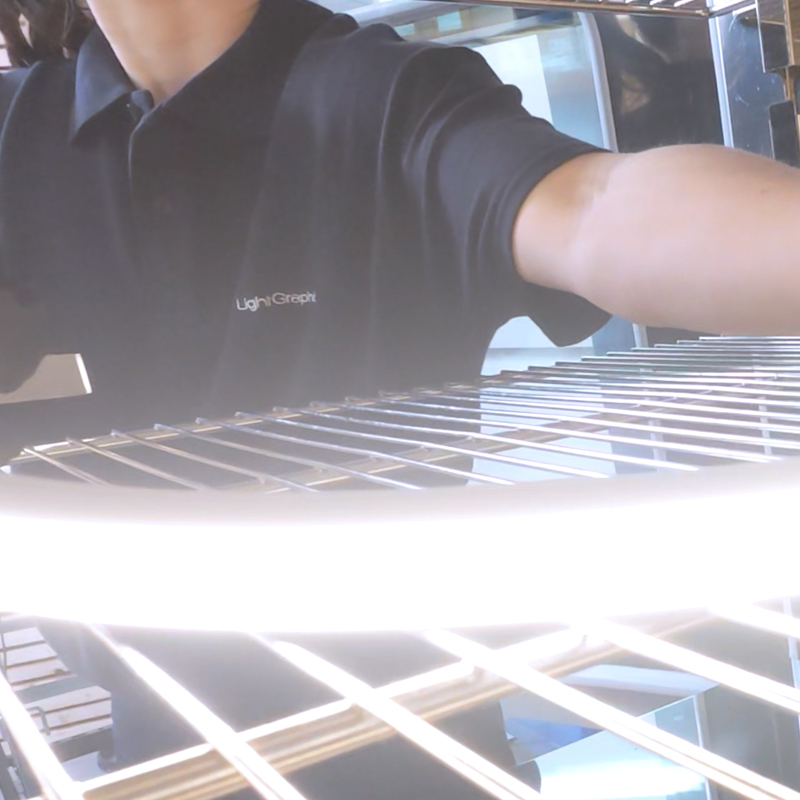
Through extended in-house thermal testing, LightGraphix has validated a wide range of exterior products to perform at 55°C ambient temperature.
This testing is sustained and repeatable, designed to reflect real operating conditions rather than short-term thresholds. The result is a clear understanding of how products behave under prolonged thermal stress, information that is critical at specification stage. For designers, this removes guesswork at the point it matters most.
Making specification straight forward.
Clear data is only useful if it’s easy to apply. To support this, we’ve introduced two practical tools:
- Updated datasheets with ambient temperature performance clearly stated
- A high-ambient specification toolkit, enabling quick identification of suitable products based on project conditions
Both are designed to integrate directly into the specification workflow, reducing time spent interpreting technical data and increasing confidence in product selection.
What this enables in practice:
For lighting designers working in high-temperature environments, this changes how projects can be approached:
- Broader product choice
A wider range of luminaires can be confidently specified in exterior applications - Greater design freedom
Design decisions can be led by intent rather than constraint - Reduced risk at specification stage
Clear, tested data supports decision-making and protects long-term performance - Future-proofed solutions
Specifying to 55°C ensures installations remain robust as environmental conditions evolve
This combination allows performance to be proven with confidence, not estimated. It also reflects an approach that cannot be easily replicated, built on engineering depth, control, and long-term thinking.
A practical approach to partnership.
This work is ultimately about making specifications easier.
By aligning product capability with real environmental conditions and presenting that information clearly, we support designers in delivering projects without unnecessary complexity or risk. It’s a straightforward principle: reliable products, clearly defined, easy to specify.
Specifying for high-temperature environments should not limit design intent.
With validated performance at 55°C ambient, LightGraphix provides a reliable foundation for exterior lighting in some of the world’s most demanding climates. So that when conditions are at their most extreme, the specification remains straightforward and the outcome dependable.
Specify with confidence at 55°C
Access our high-ambient specification toolkit and updated datasheets to quickly identify the right products for your project conditions.
- Clearly defined ambient performance
- Practical guidance for product selection
→ Download the High Ambient Specification Interactive Toolkit